


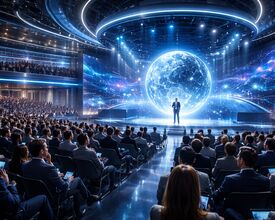
The global events industry is entering 2026 with renewed purpose and optimism. After years of rapid change and adaptation, event professionals worldwide are harnessing new technologies and strategies to create more meaningful experiences than ever. Budgets are under sharper scrutiny, and every event is expected to deliver clear outcomes, but this challenge is fueling innovation rather than dampening spirits.
In fact, a recent global survey found that 85% of event professionals were optimistic about the industry's prospects in 2026, the highest in five years. From cutting-edge event management software to a reinvigorated focus on sustainability and community, 2026's key trends reflect an industry that is both inspired and adaptive.
Below, we explore the most significant event trends on the horizon and how they will reshape events for planners, corporate clients, venues, and agencies alike.
1. AI and Automation Revolutionise Event Planning
Artificial intelligence (AI) is rapidly becoming the driving force behind the next generation of events, transforming how they are planned, managed, and experienced through unprecedented levels of automation and insight. If 2025 was the year planners experimented with AI, 2026 is the year it becomes an indispensable co-pilot quietly running in the background. Forward-thinking event teams are deploying AI to automate tedious tasks and supercharge their capabilities. Content generation for event websites, personalised email drafts, attendee segmentation, schedule building, and real-time data reporting can now happen in minutes, not days.
AI-powered virtual assistants and chatbots embedded in event platforms are handling attendee FAQs about sessions and logistics in real time, easing the load on human staff. There's an 'AI hack' for every part of an event, and the payoff is lower costs, shorter timelines, fewer bottlenecks, and experiences that feel tailor-made. The bottom line: planners who treat AI as a trusted partner rather than a novelty are already operating at a different level. In fact, experts warn that if your event team isn't using AI daily in 2026, you’re missing the operational advantage the entire industry is moving toward. From predictive analytics that forecast attendance to intelligent chatbots that guide attendees on-site, AI and automation are revolutionising event planning – allowing human creativity and strategy to shine through.
2. Hyper-Personalised Experiences Powered by Data
In 2026, the era of one-size-fits-all events is well and truly over. Attendees, especially the rising Generation Z workforce, expect hyper-personalised experiences that make them feel 'the event was built for them'. Every touchpoint, from marketing to on-site engagement, is shifting to an attendee-centric design. This trend is fueled by the rich first-party data events now generated, which have quietly become one of the most valuable assets for organisations. Modern event platforms serve as powerful data hubs, capturing each registrant's preferences, session selections, booth visits, clicks, and feedback in real time.
Smart planners are leveraging these insights to curate content and suggestions that are uniquely relevant to each participant. Imagine conference apps that suggest sessions or networking opportunities based on your role and interests, or ticketing systems that remember past behaviours to offer personalised recommendations; these are no longer futuristic ideas but are now available capabilities. Data-driven personalisation means an attendee's agenda, communications, and even on-site navigation can adapt to their needs and behaviour in real time. For example, returning attendees might enjoy a fast-track registration with pre-filled details, while newcomers get a simplified sign-up tailored to their background.
Once the event is underway, AI-driven nudges can remind participants of the next session they 'must see' or introduce them to peers with similar interests. This level of customisation makes attendees feel valued and maximises their engagement. The payoff isn't just happier participants; it's also a higher ROI for organisers: engaged attendees tend to stay longer, network more, and derive greater value, which in turn drives loyalty and positive word-of-mouth. Moreover, all interaction data feeds back into improving the next event.
By treating events as data engines and feedback loops rather than isolated experiences, planners can continuously refine their strategy. In a world where third-party tracking is diminishing, events provide a goldmine of consent-based insights. The trend for 2026 is clear: winners will be those who use data to deliver personalised, relevant, and memorable journeys for each attendee, turning raw data into delighted audiences and demonstrable success.
3. Event Management Software Takes Centre Stage
While flashy event tech often grabs the headlines, 2026 is the year organisational event management software finally gets the attention it deserves. As events grow larger, more complex, and more collaborative, traditional ways of working - endless email threads, scattered Excel files, shared drives no one fully trusts - are reaching their breaking point.
Event teams are increasingly realising that email inboxes were never designed to run events. Critical information gets buried, document versions conflict, responsibilities become unclear, and mistakes occur simply because no one is looking at the same source of truth. In a high-pressure environment where timing, accuracy, and accountability are everything, that's no longer acceptable.
This is why centralised event management platforms focused specifically on organisation and project management are rapidly gaining ground. Instead of adding yet another tool, these platforms replace fragmented workflows with a single, structured environment where tasks, call sheets, timelines, files, suppliers, and team communication converge. Everyone, from internal teams to external suppliers, works from the same up-to-date information, in real time.
The impact is significant. Planning becomes faster because information no longer needs to be searched for or duplicated. Collaboration improves because responsibilities are clearly defined and progress is visible to all stakeholders. And risks are reduced because sensitive data is no longer spread across personal mailboxes or unsecured spreadsheets.
In 2026, this shift is less about 'more technology' and more about better organisation. Event professionals want tools that support how events are actually built: collaboratively, under pressure, and with zero margin for error. Software that acts as the operational backbone of an event, rather than a marketing gimmick, is becoming essential infrastructure.
4. Hybrid and Virtual Events Find Their Purpose
As we head into 2026, the industry has settled into a new equilibrium where in-person and online events go hand in hand. The pandemic-era boom in virtual events has evolved, not disappeared – instead, organisations are strategically blending formats to get the best of both worlds. Hybrid events (combining live and virtual components) have become the norm, offering flexibility and wider reach without sacrificing the energy of face-to-face interaction. Attendees have diverse preferences and sometimes face travel constraints, so offering a virtual attendance option alongside the physical event can significantly expand audience size and inclusivity.
Studies even show that these strategies pay off: 86% of B2B organisations reported a positive ROI within 7 months of hosting a hybrid event, thanks to the broader audience and extended life of content. Crucially, 2026's approach to virtual is more purposeful than the all-virtual hype we saw in earlier years. Companies are leaning on virtual formats for what they excel at – for example, internal meetings, global town halls, trainings, and other gatherings where scale, cost, or accessibility outweigh the need for physical presence. This means virtual events are making a meaningful comeback, but with clear intent (e.g. reaching thousands of employees or international stakeholders efficiently) rather than as a trendy gimmick.
Meanwhile, in-person events are roaring back for the occasions that truly benefit from face-to-face magic – networking, hands-on exhibits, and immersive experiences. Importantly, even these live events are now augmented by technology learned from virtual experiences: improved event apps, on-demand session streaming for those who couldn’t travel, and interactive digital elements to enhance audience engagement. The key trend is flexibility: planners are designing events so that whether someone attends in the ballroom or from their home office, they get exceptional value. By analysing engagement data from in-person and online attendees, organisers can measure impact holistically.
In short, 2026 will further erase the rigid line between 'physical' and 'virtual' events – every gathering can be a mix of both, tailored to audience needs. The result is a more resilient event strategy that can weather disruptions and maximise global participation, all while maintaining a human, connected feel.
5. Sustainability and Purpose-Driven Events as the New Standard
The global events community is increasingly united on one priority: sustainability and social impact are no longer optional; they're expected. By 2026, green and purpose-driven practices will be central to event planning, mainly driven by attendee values (especially among younger generations) and corporate ESG commitments. This trend manifests in multiple ways. Environmentally, event organisers are committing to eco-friendly choices from start to finish – selecting venues with renewable energy and green certifications, reducing single-use plastics and waste, sourcing local food to reduce transport emissions, and opting for digital ticketing and materials to save paper.
Many conferences and festivals aim for net-zero or carbon-neutral events, often by offering carbon offset options during registration or by investing in reforestation and renewable energy projects to offset travel emissions. The push for sustainability also reinforces the hybrid event model: enabling remote participation helps reduce the carbon footprint of air travel without sacrificing the in-person experience. On the social side, events in 2026 are increasingly purpose-driven – meaning they align with broader values and missions that resonate with attendees. Planners are partnering with charities or local community projects, donating a portion of proceeds to those causes, or incorporating volunteer opportunities into the program. Attendees are drawn to events that contribute to the greater good, not just to business or entertainment. As a result, communicating a genuine commitment to social and environmental responsibility is becoming vital for marketing an event.
Surveys show that failing to demonstrate inclusivity and sustainability can alienate a significant portion of potential attendees. On the flip side, showcasing initiatives such as diverse speaker lineups, accessible venue design, and eco-friendly production can boost an event’s appeal and reputation. Industry leaders predict that events that embrace sustainability, inclusivity, and cultural authenticity will thrive and strengthen the industry’s relevance. We're already seeing this: from global conferences eliminating paper handouts and beef-centric menus in favour of event apps and plant-based catering, to music festivals banning plastic straws and hosting donate-for-discount ticket schemes. By weaving purpose into the fabric of events, organisers not only reduce harm – they also create a deeper connection. Attendees feel proud to be part of something that aligns with their values, which in turn builds loyalty and community. In 2026 and beyond, the most successful events will be those that leave positive environmental and social legacies, along with lasting memories.
6. Experiential Engagement and Community Building
More than ever, events in 2026 are being designed as immersive experiences and thriving communities, rather than just one-off gatherings. Attendees are seeking not just content, but connection – both to the people around them and to the larger purpose of the event. This is leading planners to prioritise networking, interactivity, and year-round engagement as key outcomes. According to industry observations, many attendees now say the chance to meet people and feel part of a community is the biggest draw of an event – even more than formal content sessions. This marks a shift in strategy: organisers are reimagining agendas to include more opportunities for meaningful interaction. Expect to see curated meetups, workshops, roundtables, and peer-to-peer discussions take centre stage, replacing some of the old lecture-heavy schedules.
Creative formats like 'walk-and-talk' outdoor meetings, role-based networking lounges, and hosted buyer programs (matching up buyers and suppliers for targeted connections) are becoming common. The physical environments are also adapting, with lounge areas, interactive expo booths, and even playground-style spaces for gamified networking, all encouraging people to engage rather than sit passively. This focus on experience extends to entertainment and surprise elements as well: live polls, AR/VR demos, hands-on challenges, and unique venue choices (rooftops, museums, theme parks) contribute to a memorable atmosphere. The underlying idea is that attendees should be co-creators of the event, not just consumers. By participating, sharing, and interacting, they form a community around the event brand.
That sense of community doesn't dissolve when the event ends. A big trend for 2026 is sustaining engagement year-round. Organisers are increasingly using online forums, social media groups, and member communities to sustain the conversation between events. The annual conference becomes an ongoing network where past attendees exchange ideas, access exclusive content, and promote one another for the next gathering. This not only builds loyalty but also generates invaluable word-of-mouth marketing – your attendees become ambassadors, inviting others to join. Speaking of marketing, authenticity is king. Rather than splashy ads or one-size-fits-all promotions, event marketers are tapping into the power of people. Micro-influencers – industry professionals or enthusiasts with niche followings – are now essential to promotional strategies. Their genuine endorsements and social media content about the event drive engagement far more effectively (and cost-efficiently) than traditional celebrity spokespeople.
A tech conference might partner with a few respected startup CEOs on LinkedIn or YouTube to share why they're attending, or a music festival might use popular TikTok creators to preview the experience. These collaborations feel more trustworthy and relatable, and they often come with built-in engaged audiences. Additionally, user-generated content (UGC) is heavily encouraged. Events create Instagrammable moments, branded hashtags, and photo contests to encourage attendees to share their experiences online. Seeing real people enjoying an event – through posts, videos, testimonials – provides social proof that can go viral and entice new audiences. Even the way events approach social media is evolving: instead of just posting ticket links, teams are sharing bite-sized highlights, tips, and stories that deliver value without requiring a click (so-called 'zero-click content') to cater to algorithmic and audience preferences. All these efforts feed into a virtuous cycle: an engaged community produces compelling content and buzz, which in turn grows the community and the event's impact.
By 2026, the best events feel less like isolated conferences and more like vibrant movements or tribes. Whether it's a corporate summit fostering an industry network or a fan convention igniting year-round fandom, the power of community is a trend that's here to stay.
Conclusion: Preparing for an Inspiring Future
As we look toward 2026, it's evident that the events industry is stepping into a bold new era defined by innovation, purpose, and human-centric value. The trends shaping global events – from high-tech event software and AI to sustainability commitments and community-driven engagement – all point to one theme: creating experiences that are smarter, more inclusive, and profoundly impactful. Event professionals across the spectrum (planners, venues, agencies, and corporate hosts alike) are not just adapting to these trends; they're leveraging them to elevate their events. The challenges of recent years have bred an industry of resilient, creative thinkers who know how to do more with less and measure what truly matters. By embracing data and technology, they are making events more personalised and efficient; by championing green and social causes, they are making events more meaningful; and by focusing on networking and content that lives beyond the ballroom, they are making events more lasting in their influence.
The outlook is undeniably exciting. Industry veterans note that with greater integration of tech, sustainability, and inclusivity, we are "entering a new era of more meaningful, impactful events... that not only connect people but also create lasting value". In practical terms, that means an event in 2026 might generate actionable insights for stakeholders, spark collaborations among diverse attendees, leave a smaller carbon footprint, and foster a loyal community – all at once. For those ready to innovate, there's an enormous opportunity to wow audiences and exceed expectations.
The global events scene is set to thrive, and the world will be watching as our industry delivers experiences that inspire change and push boundaries. By staying ahead of these trends and remaining agile, event professionals can turn 2026 into a landmark year – one where events truly uplift and unite people across the globe. Here's to an extraordinary year of events!