


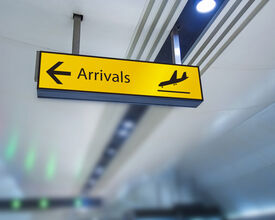
Before the keynote. Before the networking. Before the first slide appears. Your event is already being judged.
Within the first seven minutes of arrival, attendees form lasting impressions about professionalism, value, organisation and even whether the day will be worth their time. That judgment is largely emotional rather than rational. If you want to elevate your events, start at the entrance.
The Brain on Arrival
When people enter a venue, their brain scans for three things:
- Is this organised?
- Do I feel welcome?
- Do I know what to do next?
If any of those answers are unclear, stress levels rise. And stressed attendees do not engage well. Research in behavioural psychology shows that first impressions anchor perception. Once someone labels an event as chaotic or smooth, that label colours everything that follows. In other words, a weak check-in can undermine a brilliant programme.
Registration: Friction or Flow?
Nothing kills momentum faster than a queue with no explanation. Smooth registration is not just about operational efficiency. It signals competence.
Whether you are using digital check-in, badge printing or on-site scanning, the goal is clarity and speed. A well-prepared registration desk supported by a structured guest list system prevents the typical last-minute scrambling.
Many planners still rely on scattered spreadsheets, which makes live updates stressful. A centralised system, such as eventplanner.net's event management software, keeps your guest data, ticketing, and on-site coordination aligned in real time. Less chaos behind the desk means more confidence in front of it. And attendees feel that immediately.
Signage: Silent Communication
Good signage reduces cognitive load. Poor signage increases anxiety. Directional clarity is not about design aesthetics alone. It is about decision-making. Clear wayfinding, visible session boards and intuitive layouts help attendees relax. When people do not have to think about where to go, they can focus on why they came.
Large-scale conferences such as IMEX Frankfurt handle thousands of arrivals daily, yet the flow remains structured because navigation is prioritised alongside content. Your event may be smaller, but the psychological principle is the same.
Atmosphere: Emotion Before Information
Lighting, sound, scent, temperature and even staff posture contribute to perception. Is music playing when guests arrive? Are team members smiling and proactive? Is there energy in the room, or does it feel like a waiting hall?
The atmosphere sets the emotional tone. And emotion determines engagement. Events like SXSW master this. From the moment attendees step into the environment, there is a distinct identity and buzz. The arrival feels intentional.
You do not need a festival scale to create that effect. You need clarity of brand and consistency in execution.
The Hidden Opportunity
The first seven minutes are not just about logistics. They are about opportunity. This is when attendees are most alert. Most curious. Most receptive. Consider adding a small but memorable touch at arrival:
- A personalised welcome
- A surprise element
- A clear host presence
- A guided first interaction
Designing the arrival intentionally transforms it from a bottleneck into a strategic moment. Because by the time your opening speaker steps on stage, your audience has already decided how they feel. Make sure the first seven minutes are working for you, not against you.
Source: Photo: iStockPhoto 629026816