


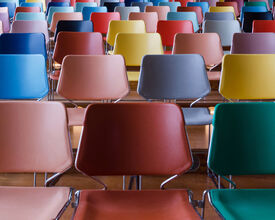
The chair is probably the most overlooked decision at your event, and the one your guests feel the most.
You'll agonise over the speaker line-up, the lighting, the catering, the run-of-show. The chair gets picked on price, or not picked at all. Most organisers take whatever the venue has stacked in a cupboard. Yet your audience spends the entire event in sustained, physical contact with this one object. Of everything you provide, it's the thing they actually touch the longest.
A bad chair quietly sabotages everything else you've built
For a twenty-minute drinks reception, a basic stacking chair is fine. For a three-hour congress, it's a slow form of torture, and a numb backside beats your best keynote speaker every single time. If you're running long sessions, sit in the chair yourself before you order three hundred of them. Check the back support, the seat, and whether there's enough legroom so that people aren't folded into each other for an afternoon.
A comfortable chair in the wrong place is still a bad seat
Sightlines matter as much as cushioning. Everyone in the room needs a clear view of both the speaker and the screen. Never seat a paying guest behind a pillar, a truss or a piece of décor. Stagger your rows where you can, and walk the room from the worst seat in the house before you sign off on the layout. The view from the stage is irrelevant; the view from row fourteen is the one that counts.
Here's the detail almost everyone overlooks: in rows, your chairs need to be linked
If you're using a theatre setup, use clip-together seating. It isn't about neatness. It's safety. The moment a room has to be evacuated, loose chairs get knocked over, scatter, and block the very gangways people are trying to escape through, turning a quick exit into a pile-up. Linked rows stay put and keep the route clear. In many countries and regions, this isn't optional advice; it's a legal requirement once rows pass a certain length. Check before you assume the venue's stacking chairs will do.
The chair is also a capacity calculation in disguise
Every layout has a footprint: a theatre setup needs roughly half a square metre of net floor space per person, a classroom layout closer to one and a half. Change the chairs or the arrangement, and you change how many people fit - and how the room feels. Cramming in extra seats to hit a headcount doesn't just kill comfort; it eats into the gangways your fire plan depends on. The opposite mistake is just as real: too few chairs in a too-large room, and your crowd feels thin and lost.
Sometimes the smartest chair decision is fewer chairs
Rows of seating signal "sit still and listen" before a word is spoken. If you want energy and conversation, say so with the furniture: a circle with the speaker in the middle, clusters of seating in a networking zone, high tables people can drift between, round tables for dinners that actually let guests talk to each other. The arrangement tells your audience what kind of event it will be.
A row of identical chairs quietly assumes identical bodies
It doesn't. Build in proper spaces for wheelchair users, at the front, with a clear view, not wedged at the back behind everyone else - and reserve seating for press and VIPs before the room fills. Accessibility isn't an add-on to the seating plan; it is the seating plan.
No one will ever come up to thank you for the chairs
But they'll remember the dead leg, the blocked view, the seat that creaked all afternoon. And in the worst case, they'll remember scrambling over toppled furniture to reach an exit. The chair is the sole point at which your entire event meets the human body. Choose it as it matters.
More about this topic and lots of other tips about organising events can be found in the book EVENTS.
Source: Photo: iStockPhoto 479087782