

On the night from Thursday to Friday, the hardstyle festival Defqon. 1 in the Netherlands, one faced the scenario that keeps every organiser awake at night: the entire festival weekend had been cancelled.
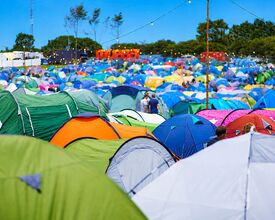
At midnight, tens of thousands of festival-goers who were already at the campsite were informed. The reason was Code Red, the highest weather warning issued by the KNMI, which also applied to Flevoland due to the extreme heat. "The unthinkable has happened," the organisation wrote on Instagram.
For an event that normally draws well over 72,000 visitors a day, including many international visitors, the impact is gigantic. But at least as instructive for anyone planning events themselves is the way organiser Q-dance handled the cancellation. After all, the plug wasn't pulled all at once.
A cancellation in two phases
Earlier that week, Q-dance initially opted for an intermediate step. Capacity was drastically reduced: on Friday and Saturday, only weekend ticket holders were admitted, while nearly 30,000 day ticket holders were turned away. The reasoning was operational: heat mitigation measures such as extra shade and greater spacing on the site simply work better with fewer people. And one of the biggest shows was also moved from 4:00 PM to 7:00 PM as a precaution.
On paper, that looks like a smart, phased de-escalation. You keep the event going, limit the risk, and buy time to monitor the weather forecast. In practice, however, that intermediate step provoked very mixed reactions.
Understanding and anger at the same time
Reactions varied widely. A father who was planning to go for the day with his two sons showed understanding for the decision but called the timing painful: the message only arrived in the evening around 11:00 PM, while, by his own account, he had already spent about 1,600 euros on tickets, a hotel, and clothing. A French visitor reacted much more vehemently on Instagram: she had booked flights and a hotel specifically for the occasion and wondered aloud why the festival couldn't simply be moved forward rather than cancelled.
It is precisely that international audience, from France and Belgium to Australia and Mexico, that raises the stakes. Those coming from far away and having spent a lot of money in advance feel a cancellation much more heavily than a local day-tripper. Artists, however, did show understanding immediately: a well-known DJ duo stated that, given the heat, this was likely the only responsible decision, "even though it breaks our hearts." The mayor of Dronten also supported the decision, with the safety of visitors and staff as the absolute priority.
Then came code red
The interim solution did not hold. On Thursday afternoon at 4:00 PM, the KNMI issued a code red; about eight hours later, around midnight, the decision was made to cancel the entire weekend after all. According to the organisation, this could not be done any sooner: only with the official code red was the tipping point for the safety of visitors and staff reached. "We are absolutely devastated by this," they said. All tickets will be refunded; more information regarding additional compensation will follow after the weekend.
Unrest on the premises
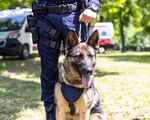
Delivering the bad news in the middle of the night, with tens of thousands of people already on site, inevitably caused tension. A group of angry campers headed towards the main stage, which the organisers had intended to keep secret until the start. This led to a confrontation with security guards: flags were pulled from flagpoles, and fences were pushed over. According to Q-dance, it involved a group of fewer than a hundred people, and the situation was quickly brought under control; other reports say police arrived on the scene to ensure a smooth departure. The campsite remained open on Friday so that everyone could leave peacefully, with shuttle buses to the parking lots.
What do you take away from this as an organiser?
The cancellation of Defqon. 1 is primarily a case of force majeure. However, the approach offers a few concrete lessons for those who organise (large) events themselves:
- A contingency plan for extreme weather is no longer a luxury. Heatwaves and red alerts are becoming an increasingly common reality. Determine in advance who makes decisions, based on which thresholds, and in consultation with which authorities. For very large events, this was already expected by governments anyway.
- A phased scaling down sounds smart, but it creates expectations. By initially only cancelling day tickets, Defqon. 1 kept hope alive among weekend visitors, making the complete cancellation all the harder to bear. Communicate honestly at every intermediate step that further measures remain possible.
- The timing and channel of your communication determine the tone of the reactions. Bad news at midnight, when people are already on the scene, is hard to swallow. The earlier and clearer you communicate, the more understanding you generally receive. But sometimes, like now, you simply have no other choice.
- Take your international audience into account. Travel and accommodation costs significantly increase the effort required for foreign visitors. A clear, prompt compensation policy is therefore crucial.
- Plan crowd management for when things go wrong as well. An evacuation or early termination requires just as much preparation as the setup: consider shuttle transport, clear instructions, and adequate security at sensitive points.
No organiser ever wants to have to announce "the unthinkable." But those who think ahead about the scenarios they would rather not experience are in a much stronger position at the decisive moment.
Source: Photo: iStockPhoto 507029817